
Scoliosis Treatment

Support Your Spine. Improve Alignment. Live More Comfortably.

Scoliosis is more than just a curve in the spine, it can affect posture, movement, confidence, and overall quality of life at any age.
While many people associate scoliosis with children or teenagers, the reality is that scoliosis affects people of all ages. Some are diagnosed early in life, while others don’t realize they have it until adulthood when symptoms like pain, stiffness, or imbalance begin to appear.
At Milton Spine and Wellness, we provide personalized, non-invasive care to help manage scoliosis, reduce discomfort, and improve spinal function, so you can move and feel better every day.

What Is Scoliosis?

Scoliosis is a condition where the spine curves sideways, often forming an “S” or “C” shape instead of a straight line. This curvature can develop for different reasons and may vary in severity. In some cases, it’s mild and goes unnoticed. In others, it can lead to:
Because the spine plays such a critical role in the body, even a small curvature can have a ripple effect on overall function.

Scoliosis Affects All Ages

Children & Teens

Scoliosis often develops during growth spurts. Early detection is important to help guide proper spinal development and prevent progression.

Adults

Many adults live with scoliosis without realizing it. Over time, it can lead to:

Older Adults

Age-related scoliosis (degenerative scoliosis) can develop due to wear and tear on the spine, often accompanied by stiffness, discomfort, and reduced mobility.
No matter your age, scoliosis can impact your daily life, but with the right care, it can be managed effectively.

What Causes Scoliosis?

Scoliosis can be caused by several factors, including:
Each case is unique, which is why personalized care is so important.

Who Is a Candidate for Scoliosis Treatment?

You may benefit from scoliosis treatment if you notice:
Even if your scoliosis was diagnosed years ago, treatment can still help improve comfort and function.

What to Expect at Milton Spine and Wellness

We take a comprehensive, individualized approach to scoliosis care.

Step 1: Consultation & Evaluation

We assess your posture, spinal alignment, and symptoms to understand how scoliosis is affecting your body.

Step 2: Functional Examination

This may include movement analysis, muscle balance testing, and spinal assessment.

Step 3: Customized Treatment Plan

Your care plan is tailored to your age, condition, and goals.

Step 4: Targeted Treatment

Your plan may include:
1. Spinal adjustments to improve alignment and mobility
2. Corrective exercises to strengthen and stabilize the spine
3. Posture correction strategies
4. Soft tissue therapy to reduce muscle tension
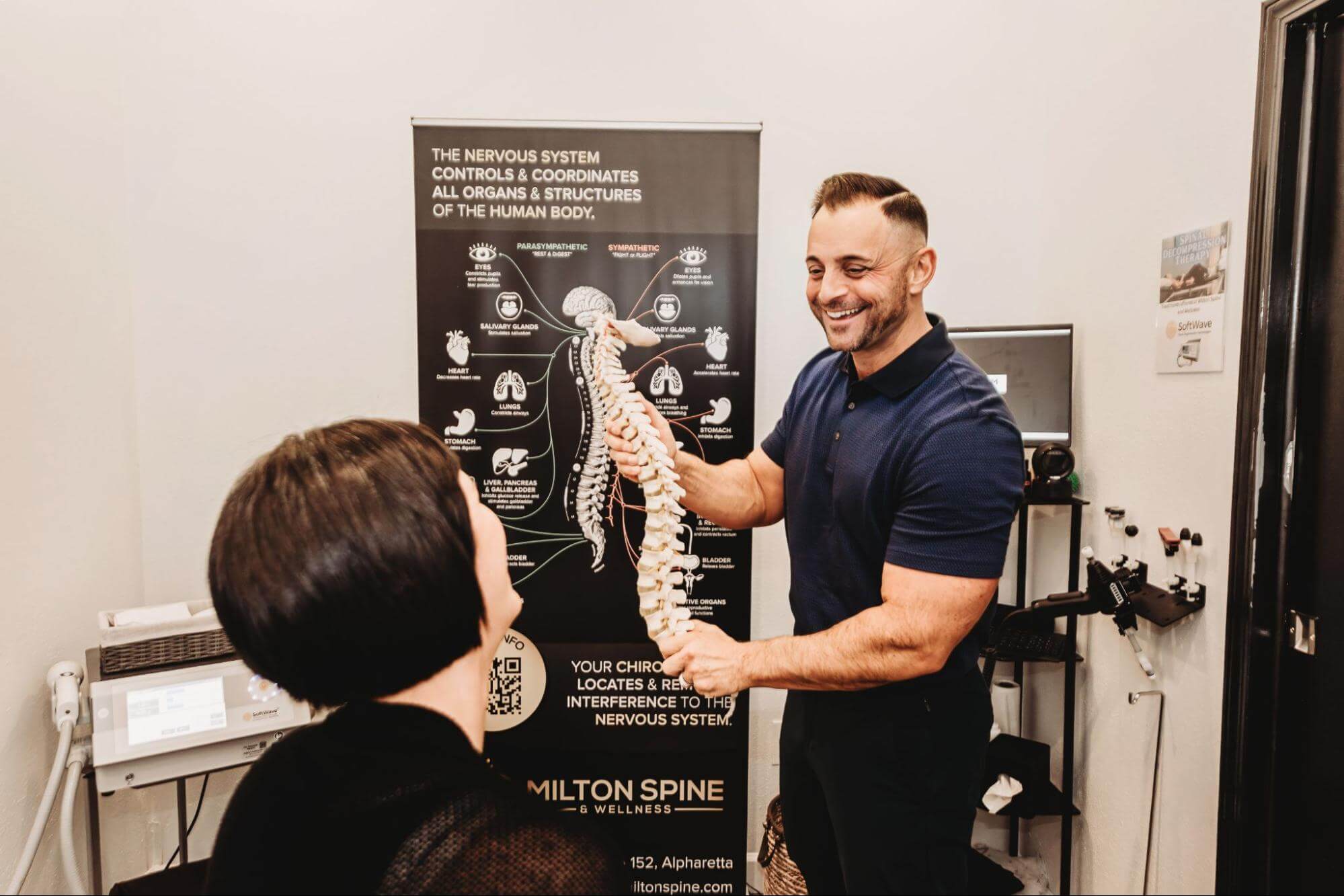
Milton Spine and Wellness Care

Benefits of Scoliosis Treatment

With consistent care, many patients experience:

While scoliosis may not always be “reversed,” it can be effectively managed to reduce symptoms and improve daily living.

How Long Does Treatment Take?

Scoliosis care is typically ongoing, as it involves managing and supporting the spine over time.

What to Expect:
Consistency plays a key role in achieving the best outcomes.

Is Scoliosis Treatment Safe?

Yes. Our approach is non-invasive, gentle, and tailored to your specific condition.
We focus on safe, proven methods that support your body’s natural structure and function.

Ready to Support Your Spine?

If scoliosis is affecting your posture, comfort, or daily life, the right care can make a meaningful difference. Schedule your consultation today and take the first step toward better alignment, movement, and long-term spinal health.

Why Choose Milton Spine and Wellness?

We understand that scoliosis is not a one-size-fits-all condition.

Our approach focuses on:
You’re not just managing scoliosis, you’re improving how your body functions every day.

SCOLIOSIS TREATMENT Q&A

Can a chiropractor help with scoliosis?
Yes, chiropractic care can help manage scoliosis by improving alignment, reducing discomfort, and supporting better posture and mobility.
No, scoliosis affects people of all ages. While it often develops in childhood, many adults experience symptoms later in life.
While severe cases may require medical intervention, many mild to moderate cases can be managed effectively with non-invasive care.
Common signs include uneven shoulders, back pain, muscle fatigue, and visible spinal curvature.
It can, especially if left untreated. Early care and consistent management can help slow progression and reduce symptoms.